diagnosis
4 min read
The people who’d pay you can’t find you
If your best customers still find you mostly through referrals, outbound, or luck, the issue is rarely that nobody needs what you sell. The issue is that your site is describing you one way while buyers are searching another.
The symptoms
Growth depends on referrals and outbound
Trace your last twenty customers back to their source. If most of them started with a personal introduction, outbound motion, or a lucky social post, your growth engine is still manual. Those channels can work, but they do not create durable discoverability on their own.
Competitors rank for your keywords
Search the problems your buyers would type before they know your company name. If competitors own those results, they are entering the conversation before you do. Visibility is often won by the company that mapped search intent earlier, not the company with the better service.
Your content doesn’t match buyer intent
Publishing is not the same thing as being discoverable. If your content is written for peers, partners, or your own category language, it can sound smart while missing the exact problem-language buyers use when urgency shows up.
What’s actually happening
Google and Bain’s B2B research argues that visibility matters long before a buyer fills out a form. Their work reports that 84% of B2B buyers use online search throughout the buying journey and that brands need to make the day-one list early because buyers overwhelmingly purchase from a familiar set. That means discoverability is not a top-of-funnel vanity problem. It is part of whether you are even considered.[1]
84%
B2B buyers use online search throughout the journey
Visibility matters before the buyer knows your company name.
Source: Think with Google + Bain — External B2B buying-behavior research summarized by Google and Bain.
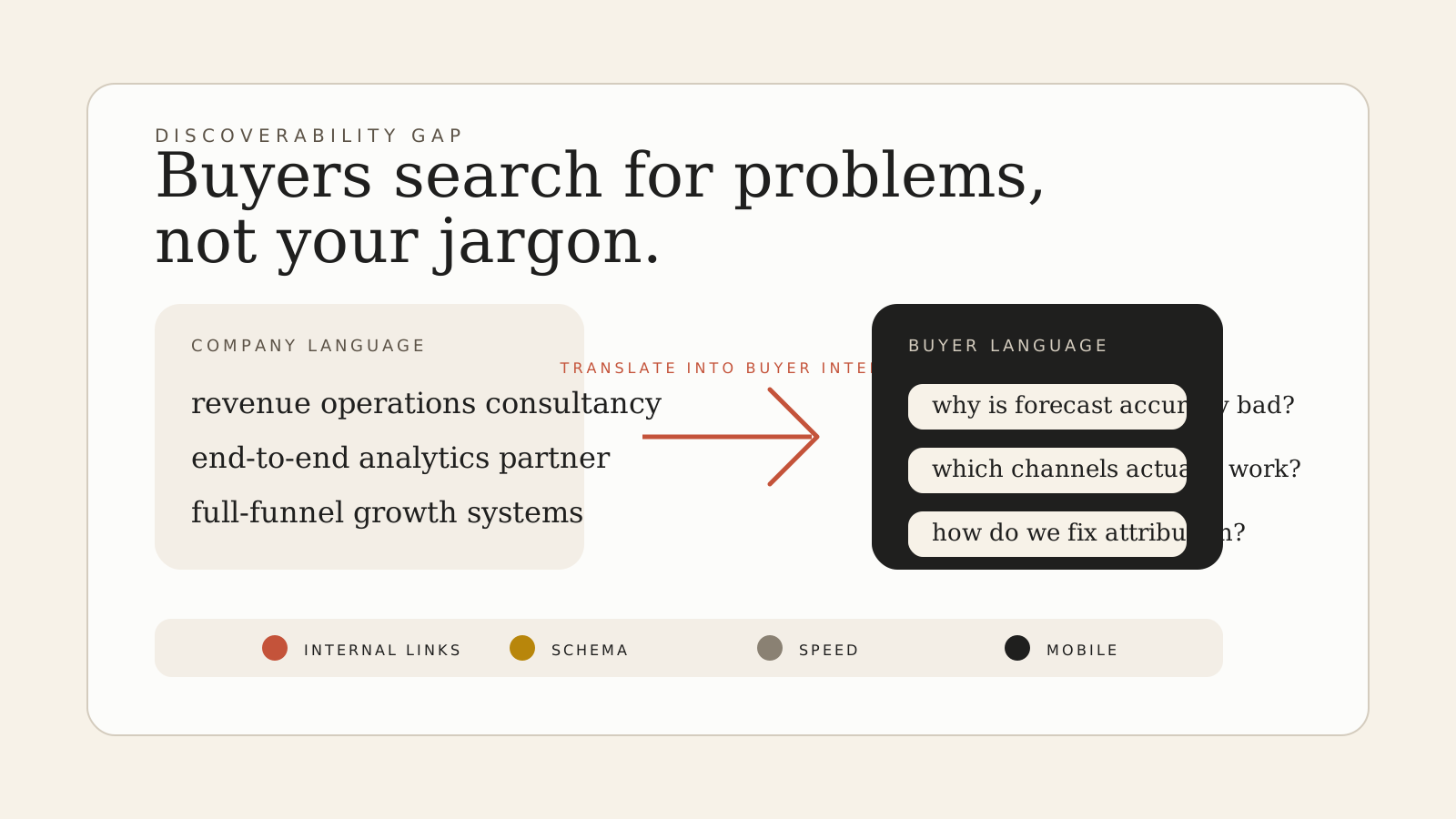
The content mistake is usually language, not effort. Buyers search for problems, symptoms, and jobs to be done. Company sites often talk in solution language, methodology language, or category shorthand. When those two vocabularies do not match, the company can publish plenty of content and still miss the moment of intent. The site sounds credible to insiders while staying invisible to the buyer who is actively trying to solve a problem.
Blog posts by intent — most content misses buyer search
Source: Internal content audit pattern — Anonymized classification of article inventories by audience intent.
The technical layer matters too. Google’s own documentation says it can generally crawl only links that are actual HTML links, and Web.dev defines a good Largest Contentful Paint as 2.5 seconds or less. Search Central documentation also encourages structured data where it helps Google understand page meaning. In practice, that means visibility depends on more than copy. Internal linking, page speed, schema, mobile presentation, and crawlable architecture all influence whether good content actually gets seen.[2, 3, 4]
In our audits, companies usually do not have a content problem in the abstract. They have a problem-to-page problem. They publish thought pieces, case studies, and company updates, but they do not build a reliable map from buyer questions to pages that deserve to rank. That is why visibility is an infrastructure problem. The work is not just to publish more. It is to make the site understandable to both buyers and search systems.
What good looks like
Start with query research that reflects buyer language instead of internal jargon. Use Search Console, interviews, sales-call transcripts, and keyword tools to identify the problems buyers actually search when urgency is present. The goal is not to collect a giant keyword list. The goal is to map high-intent problems to specific pages you can credibly own.
Then build the content and the delivery layer together. Create pages that answer the search with enough depth to earn trust, and connect them through internal links, schema where appropriate, clean information architecture, and a site that loads quickly on mobile. Helpful content on a weak delivery layer underperforms. A technically polished site without buyer-intent pages has nothing to rank.[2, 3, 4]
2.5s
Target Largest Contentful Paint for a good page experience
Strong content still needs a delivery layer that loads fast enough to compete.
Source: Web.dev — Largest Contentful Paint (LCP) — Google performance guidance for the visible loading experience.
Finally, measure visibility like an operating system, not a vanity chart. Track which pages win impressions, which queries introduce qualified visits, and which pieces actually feed pipeline. The compounding advantage comes from building a site where problem-language, page structure, and technical signals keep working after the campaign stops.
Should your buyers be finding you?
We’ll audit your current search visibility against buyer intent and show you exactly where the gaps are, and which ones are worth closing first.
Get a Visibility AssessmentFrequently asked questions
Last reviewed 2026-03-08
Why does strong content still fail to rank?+
Because ranking is not only about writing quality. If the page language misses buyer intent, the site architecture is weak, or the delivery layer is slow and poorly linked, good content can still underperform.
What do B2B buyers actually search for?+
They usually search for problems, symptoms, and jobs to be done before they search for vendor names. That is why company language and buyer language need to be mapped deliberately instead of assumed to match.
Do internal links still matter for SEO?+
Yes. Search systems still rely on crawlable links to discover and understand how pages relate to one another. Internal links are part of how you show topical structure, not just how you move users around the site.
What is the technical baseline for a discoverable article?+
At minimum, the page should target a real buyer query, load fast on mobile, use crawlable internal links, and include structured data where it helps search engines understand the page.
References
[1] Think with Google + Bain — How SaaS brands can grow in B2B markets
B2B buying research covering online search behavior and why brands need to make the day-one list early.
[2] Google Search Central — Links and crawlable links
Explains how Google crawls links and why crawlable HTML links matter.
[3] Web.dev — Largest Contentful Paint (LCP)
Defines a good LCP threshold as 2.5 seconds or less.
[4] Google Search Central — Introduction to structured data markup in Search
Explains how structured data helps Google understand page meaning and eligibility.
Read next
Why your next campaign will fail like the last one
Campaigns generate spikes. Infrastructure generates compounding growth. Here’s why running more campaigns won’t fix a systems problem.
Your analytics show growth. Your revenue doesn’t.
Traffic is up. Engagement looks healthy. But revenue is flat. Here’s why the metrics that feel like progress often aren’t.
You keep hiring agencies. Nothing compounds.
Every new agency promises a fresh start. But if nothing they build carries over, you’re renting tactics instead of building assets.